AI Agents vs Chatbots: The Future of Autonomous Digital Assistants
Introduction
Artificial Intelligence has become an essential part of modern digital systems. From customer support chats to smart assistants, AI is everywhere. In the early stages, most AI-powered systems were simple chatbots designed to answer questions or guide users through predefined options. However, AI technology has grown rapidly, and a new generation of intelligent systems has emerged AI Agents.
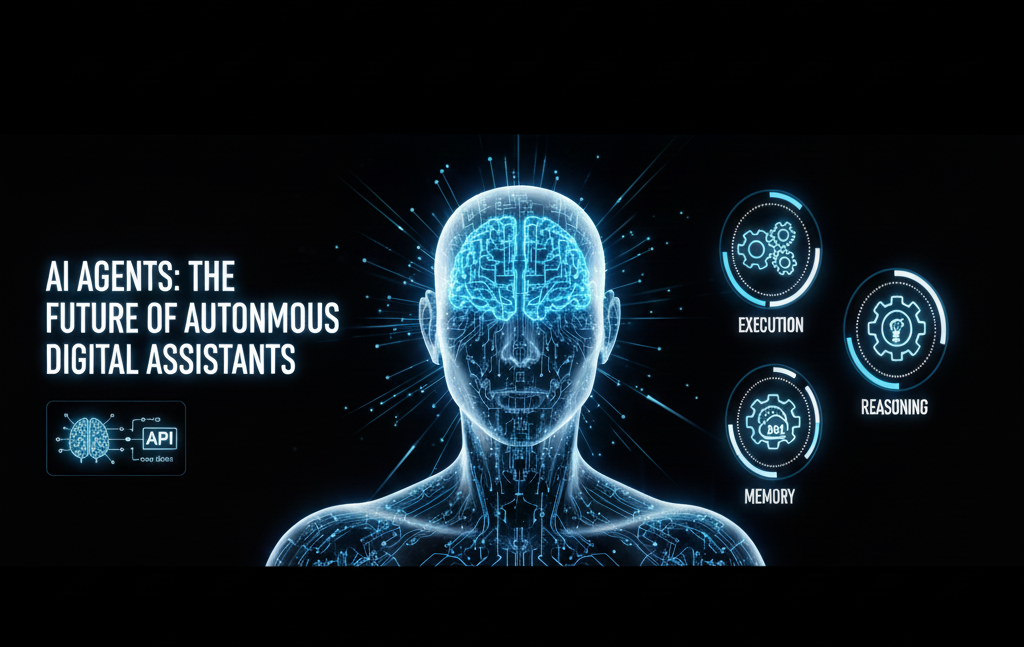
AI agents are not limited to conversation. They can understand goals, plan actions, use tools, and complete tasks without continuous human instructions. This article explains the difference between AI Agents and Chatbots, why task-executing AI is replacing basic bots, and how autonomous digital assistants are shaping the future.
Understanding Traditional Chatbots
Chatbots are software applications created to simulate human conversation. They work through text or voice interfaces and are commonly found on websites, mobile apps, and messaging platforms.
Most traditional chatbots operate using predefined rules or scripted responses. Even modern AI-powered chatbots rely heavily on user input to function. They respond only when a question is asked and stop working once the response is delivered.
Chatbots are useful for simple tasks such as answering frequently asked questions, collecting basic user information, or guiding users through fixed workflows. However, they lack independent thinking and cannot perform complex actions.
Limitations of Chatbots
Despite their usefulness, chatbots have several limitations. They cannot understand complex goals, handle multi-step tasks, or adapt dynamically to changing conditions. Every interaction requires user input, and the chatbot cannot take initiative.
For example, a chatbot can tell you your order status, but it cannot analyze shipping delays, contact vendors, or reschedule delivery on its own. This dependency makes chatbots unsuitable for advanced automation.
As businesses grow and digital workflows become more complex, these limitations become more noticeable.
What Are AI Agents?
AI agents represent a major advancement in artificial intelligence. Unlike chatbots, AI agents are goal-oriented systems capable of acting autonomously. They do not just respond—they plan, decide, and execute.
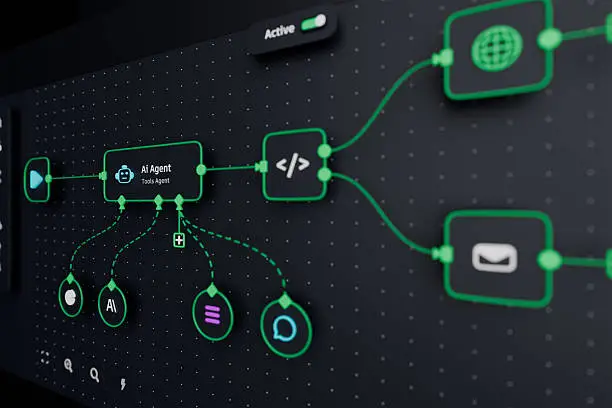
An AI agent can receive a high-level objective, break it down into smaller steps, use tools or software to complete those steps, and monitor the outcome. This makes AI agents closer to digital workers than conversational bots.
AI agents can operate across multiple platforms, access databases, call APIs, browse the web, write code, and interact with other systems all without constant supervision.
Core Components of an AI Agent
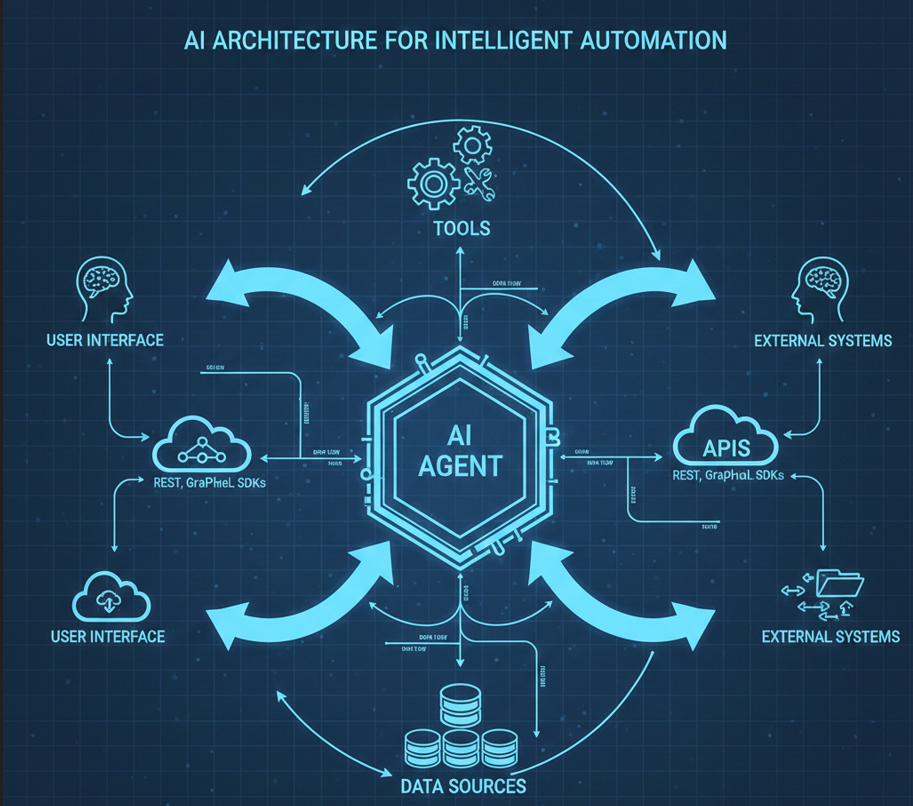
An AI agent is built using several key components working together.
- The reasoning engine allows the agent to analyze information and make decisions.
- The planning module helps it organize tasks in the correct order.
- The tool interface enables interaction with software, browsers, and external systems.
- The memory system stores past actions and improves future performance.
These components allow AI agents to behave intelligently and independently, unlike chatbots that rely on predefined responses.
AI Agents vs Chatbots: Structural Comparison
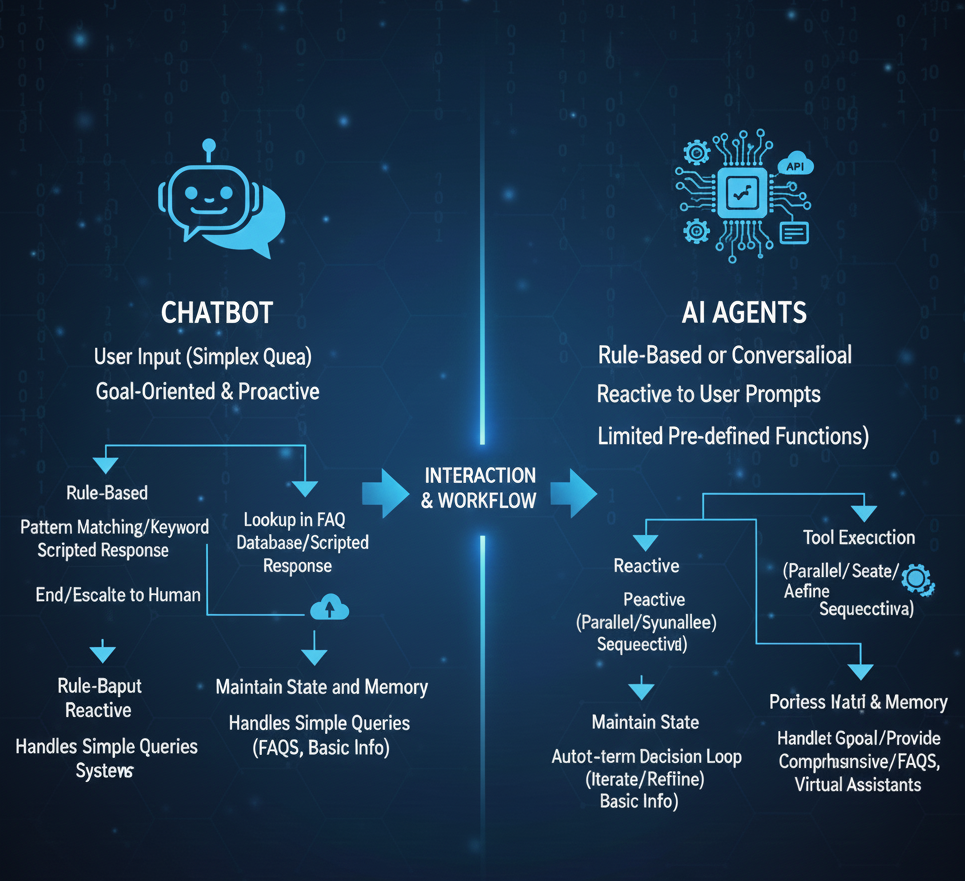
Chatbots are conversation-first systems. Their main purpose is to interact with users through dialogue. AI agents, on the other hand, are action-first systems designed to achieve outcomes.
Chatbots stop at answering. AI agents continue until the task is complete.
Chatbots require repeated prompts. AI agents operate continuously.
Task-Executing AI: The Key Advantage
The most important feature of AI agents is task execution. They can perform real-world actions such as:
- Creating and editing documents
- Running software programs
- Managing databases
- Sending emails and reports
- Writing and deploying code
This capability transforms AI from a conversational tool into an operational system.
Real-World Programs and Frameworks for AI Agents
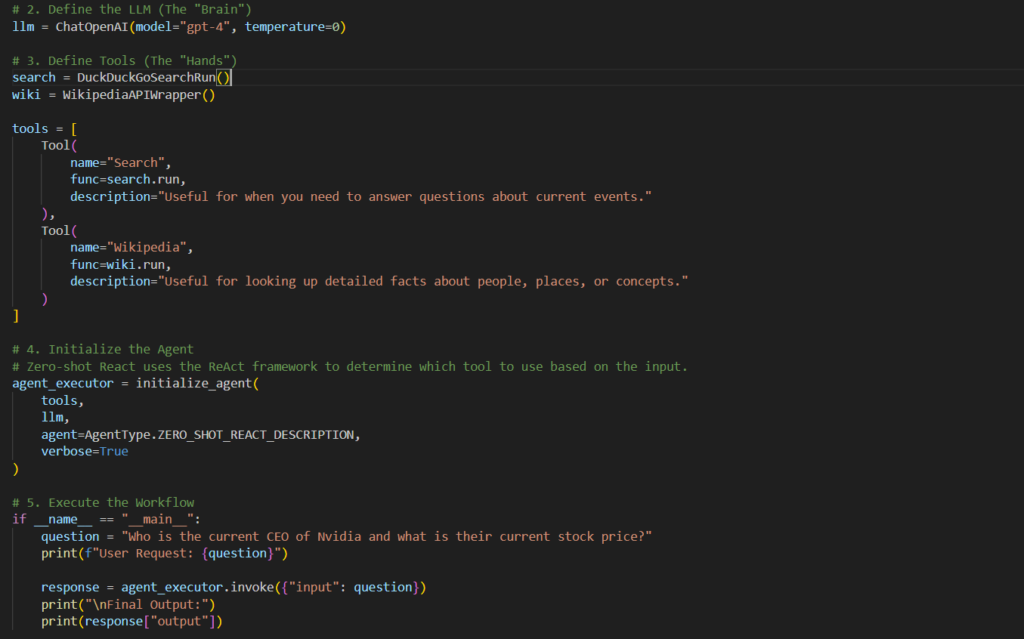
Several platforms and tools are enabling the development of AI agents today.
- AutoGPT allows AI agents to autonomously complete complex goals using GPT models.
- LangChain provides frameworks for connecting AI agents with tools and memory.
- CrewAI enables multiple AI agents to collaborate as a team.
- Microsoft Copilot Studio integrates AI agents into enterprise workflows.
These tools demonstrate how AI agents are already being used beyond chat.
Use Cases Where AI Agents Replace Chatbots
In customer support, AI agents can analyze tickets, prioritize issues, and resolve problems automatically instead of just replying.
In software development, AI agents can write code, test applications, fix bugs, and deploy updates.
In digital marketing, AI agents can research keywords, generate content, schedule posts, and analyze performance.
In data analysis, AI agents can collect data, generate insights, and create reports without human intervention.
Why Businesses Are Moving from Chatbots to AI Agents
Businesses are increasingly shifting from traditional chatbots to AI agents because modern operations demand more than simple conversations. Chatbots are limited to responding to user queries, while AI agents are capable of understanding objectives and completing tasks independently. This shift allows organizations to automate entire workflows instead of relying on manual intervention at every step.
One of the primary reasons for this transition is reduced human intervention. AI agents can operate continuously without requiring constant supervision. Once a goal is defined, the agent plans, executes, and monitors tasks on its own. This reduces dependency on human staff for routine operations and allows teams to focus on strategic decision-making rather than repetitive work.
Another major factor is improved efficiency. Tasks that previously required hours of manual effort such as data collection, report generation, system monitoring, or content preparation can now be completed within minutes. AI agents execute actions faster and with fewer errors, resulting in improved productivity and quicker turnaround times across business processes.
Scalability is also a significant advantage of AI agents. Unlike chatbots, which struggle to handle complex or simultaneous tasks, AI agents can manage multiple workflows at the same time without a drop in performance. As businesses grow, AI agents scale effortlessly to handle increased workloads, making them suitable for enterprises of all sizes.
Finally, businesses adopt AI agents for cost optimization. By automating repetitive and time-consuming tasks, organizations reduce labor costs and operational expenses. Over time, the investment in AI agents leads to substantial savings while maintaining high-quality output. This cost efficiency makes AI agents a sustainable long-term solution for modern digital businesses.
Why the Future Belongs to Autonomous AI
As technology advances, digital systems need to operate faster and smarter. Human supervision for every task is no longer scalable. AI agents solve this problem by acting independently.
Autonomous AI reduces operational costs, increases productivity, and allows humans to focus on creative and strategic work.
Chatbots will still exist, but mostly as front-end interfaces. The real intelligence will operate behind the scenes through AI agents.
Ethical and Control Considerations
While AI agents are powerful, responsible design is essential. Clear boundaries, monitoring systems, and human oversight must be implemented.
Transparency, data security, and accountability are important factors when deploying autonomous AI systems.
When used correctly, AI agents become trusted digital partners rather than uncontrolled systems.
Conclusion
The evolution from chatbots to AI agents marks a significant shift in artificial intelligence. Chatbots focus on conversation, while AI agents focus on execution. This shift is transforming how businesses, developers, and individuals interact with technology.
Task-executing AI agents are not just the future they are already reshaping digital ecosystems. As adoption increases, autonomous digital assistants will become standard tools across industries.