
SEO for JavaScript Websites
The rapid growth of modern JavaScript frameworks such as React, Angular, Vue, Next.js, and Single Page Applications (SPAs) has transformed how websites are built and experienced. However, while JavaScript improves interactivity, performance, and user engagement, it also creates SEO challenges when search engines struggle to crawl and index dynamically loaded content. In 2026 and beyond, SEO for JavaScript websites is no longer just about keywords or metadata it is about ensuring proper rendering, optimizing performance, enabling accessibility, improving user journey flow, and delivering search-friendly content structures across multiple devices and environments. Search engines now focus heavily on page experience, structured content, semantic layout, website authority, and technical rendering quality, meaning JavaScript websites must be optimized from both SEO and engineering perspectives to achieve long-term visibility and ranking stability.
A professionally optimized JavaScript website does more than appear in search results it improves discoverability, enhances content accessibility, strengthens user trust, accelerates page speed, increases session retention, and supports measurable business growth across digital platforms. JavaScript SEO requires a deeper understanding of how Google renders scripts, how crawling works for SPAs, how hydration and server-side rendering affect indexing, and how technical performance signals directly influence ranking strength. Developers, SEO analysts, content strategists, and digital marketers must work collaboratively to ensure that every JavaScript-based website maintains both functional excellence and search-engine compatibility.

Understanding How Search Engines Handle JavaScript
Before optimizing, it is important to understand how search engines interact with JavaScript-based websites. Unlike static HTML websites, JavaScript websites load content dynamically, meaning page elements may not appear until scripts are executed. Search engines typically follow a multi-stage process, which includes URL discovery, crawling, rendering, indexing, and ranking evaluation. If crucial page content is generated only after JavaScript execution and rendering is delayed or blocked search engines may fail to recognize important sections such as headings, text blocks, navigation items, or internal links.
When JavaScript is not optimized, websites may face issues such as delayed content discovery, partial indexing, broken link paths, missing structured data, or slow rendering during search evaluation. Understanding this behavior helps in planning SEO architecture for SPAs, progressive web apps, dashboard interfaces, and hybrid JavaScript environments while ensuring search visibility remains strong across devices, networks, and browsers.
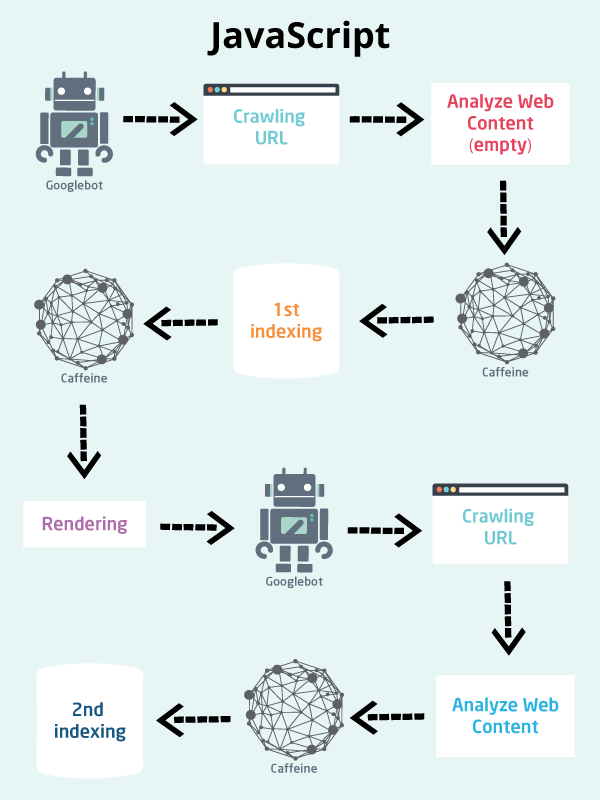
Key Points - Why JavaScript SEO Requires Special Attention
- JavaScript content may not always be indexed unless rendered correctly
- Improper script execution can hide page content from search engines
- SPAs often suffer from URL fragmentation and weak crawl paths
- Rendering delays increase page load time and affect ranking
- Structured content, links, and metadata must be visible pre-render
- Collaboration between developers and SEO teams is essential
- Technical SEO plays a major role in JavaScript website performance
Server-Side Rendering (SSR) & Pre-Rendering for Better Indexing
One of the most effective strategies for improving SEO on JavaScript websites is implementing server-side rendering (SSR) or pre-rendering. When SSR is used, the server delivers content as fully rendered HTML before JavaScript execution, ensuring search engines and users can access key information immediately. This approach reduces indexing issues, minimizes rendering delays, improves first contentful paint, and strengthens core vital metrics.
Pre-rendering, on the other hand, generates static HTML snapshots for specific pages primarily targeted for crawling. It is especially helpful for websites that do not require full SSR but still need search-friendly output for landing pages, product pages, and blog articles. Both techniques improve discoverability and ensure search bots can evaluate page data without depending entirely on client-side script execution.
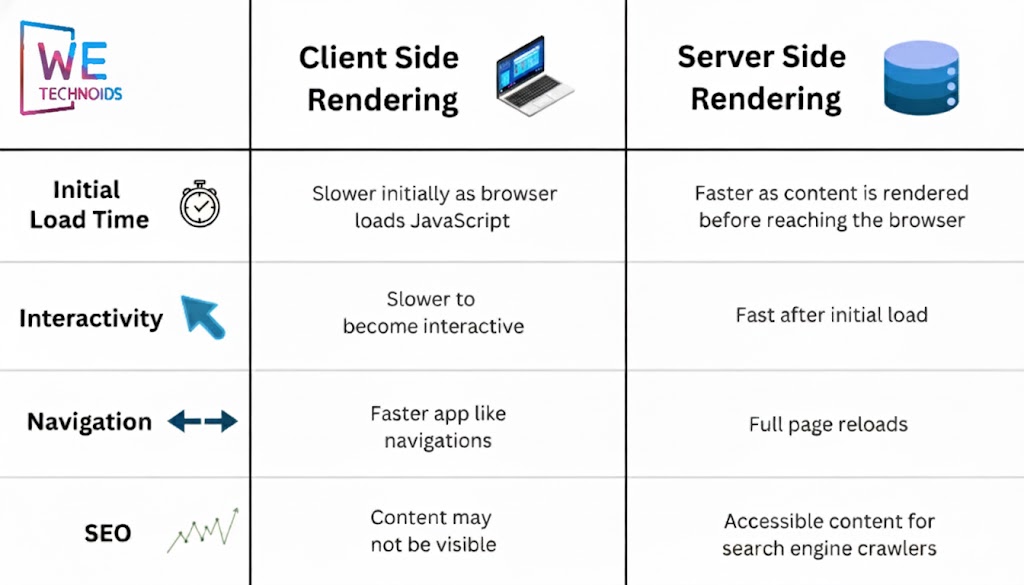
Key Points - Benefits of SSR & Pre-Rendering for SEO
- Ensures content is visible before JavaScript execution
- Improves crawlability and index accuracy
- Enhances page load speed and visual stability
- Prevents blank-page rendering during crawling
- Strengthens ranking signals for mobile and desktop
- Improves user engagement and retention
URL Structure, Routing & Internal Linking in JavaScript Websites
Many JavaScript websites suffer SEO issues due to poor routing systems and weak internal linking structures. SPAs often rely on hash-based URLs or dynamic routes that search engines may interpret as single pages rather than separate indexed entities. To avoid this issue, search-friendly routing must be implemented with clean URLs, meaningful slugs, and properly defined navigation paths.
Internal linking is equally critical it helps search engines understand content hierarchy, establishes contextual relationships between pages, and improves indexing coverage. JavaScript navigation menus, dynamic tabs, modals, or expandable sections should be developed in a way that ensures links remain crawlable, accessible, and logically structured.
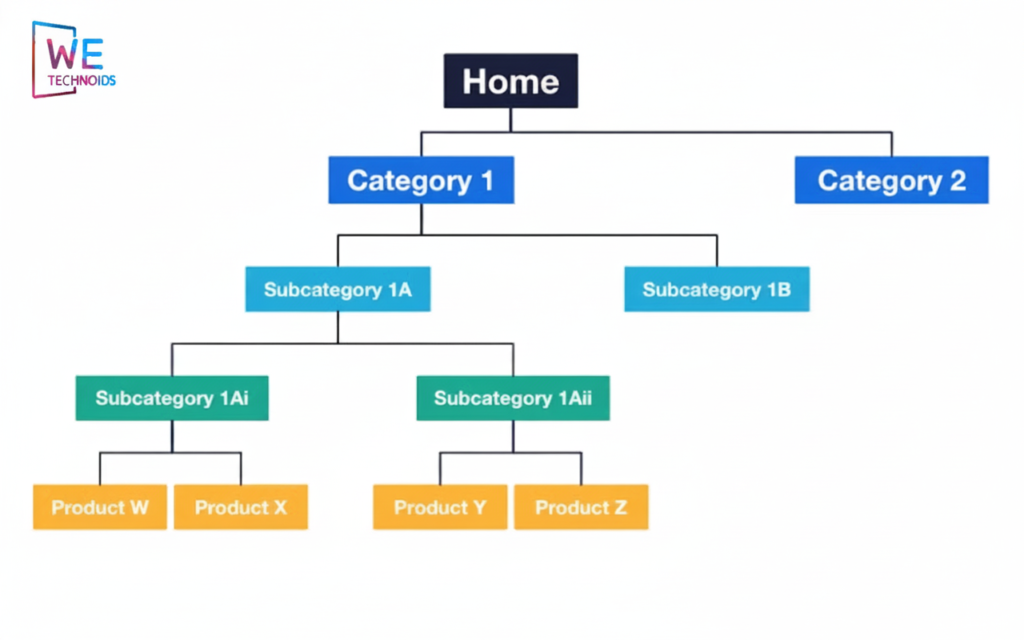
Key Points - Best Practices for Routing & Internal Links
- Use clean, descriptive, and semantic URLs
- Avoid hash-based (#) routing for key pages
- Ensure each page has a unique indexable route
- Maintain logical hierarchy across navigation paths
- Allow internal links to remain crawlable and visible in HTML
- Use consistent anchor text and contextual linking
Performance Optimization & Core Web Vitals for JavaScript SEO
Search engines increasingly prioritize user experience and performance metrics as ranking signals. JavaScript-heavy websites often load multiple scripts, dependencies, and framework libraries, which may increase load time and negatively impact metrics such as Largest Contentful Paint (LCP), First Input Delay (FID), and Cumulative Layout Shift (CLS). Optimizing performance is essential not just for SEO, but also for engagement, conversion, and overall usability.
Performance optimization includes reducing bundle sizes, lazy loading non-critical elements, compressing assets, optimizing image delivery, minimizing blocking scripts, and managing third-party libraries efficiently. Well-optimized JavaScript improves mobile ranking performance, enhances accessibility, and delivers a smoother browsing experience for users across all connection speeds
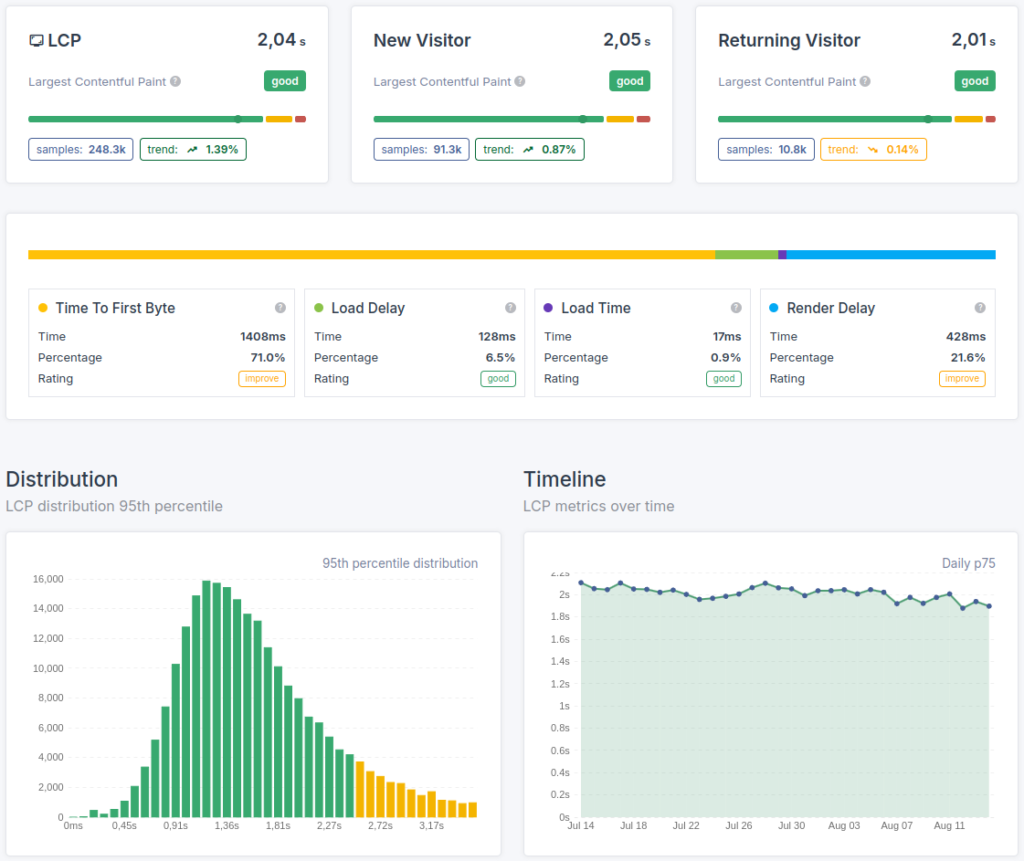
Key Points - Performance Factors That Impact JavaScript SEO
- Reduce JavaScript bundle sizes and script execution time
- Optimize images, fonts, and multimedia resources
- Use lazy loading responsibly for non-essential content
- Monitor and improve Core Web Vitals metrics
- Minimize blocking scripts and delayed rendering
- Enhance mobile responsiveness and visual stability
Structured Data, Metadata & Semantic Content Optimization
For JavaScript websites to rank effectively, structured data and metadata must be accessible and readable during indexing. Titles, descriptions, canonical tags, open-graph tags, headings, and structured schema markup should appear in pre-rendered or SSR output rather than being inserted only through client-side scripts. This improves search relevance, enables rich-result eligibility, and enhances click-through rates.
Equally important is maintaining semantic content structure with meaningful heading hierarchy, accessible text blocks, descriptive alternative text for images, and well-organized content flow. Search engines analyze both the technical and contextual clarity of JavaScript websites when assigning ranking positions.
Key Points - Structured Content & Metadata Best Practices
- Ensure metadata is visible in rendered HTML
- Use schema markup for articles, products, FAQs, and organizations
- Maintain proper heading hierarchy (H1 → H6)
- Include descriptive and meaningful content sections
- Provide alternative text for images and media
- Avoid injecting critical metadata only via scripts
Conclusion
SEO for JavaScript websites requires a strategic balance between technical performance, rendering optimization, structured content delivery, routing architecture, and search-engine accessibility. With the continued evolution of frameworks and digital platforms, organizations must ensure that every JavaScript-powered website is not only interactive and visually engaging but also search-optimized, indexable, and technically sound. By implementing server-side rendering, optimizing routing paths, improving performance metrics, maintaining semantic content structures, and aligning development with SEO best practices, businesses can achieve stronger online visibility, sustainable ranking growth, and improved user experience across all digital environments.