
AI Agents for Developers: Building the Future of Autonomous Software Development
Introduction
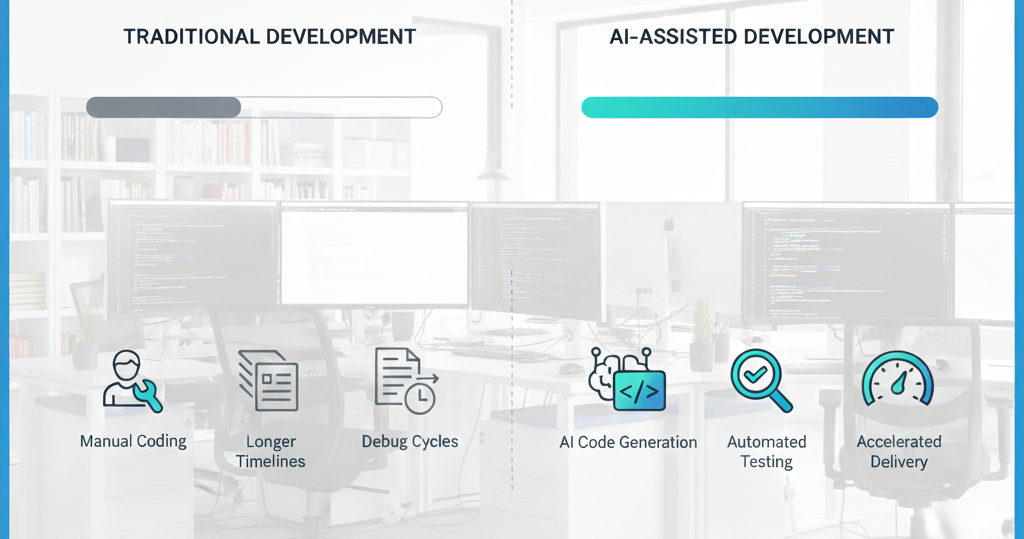
AI agents are fundamentally transforming how developers design, build, deploy, and maintain modern software systems. In traditional development workflows, engineers rely heavily on manual coding, debugging, testing, and deployment processes. While automation tools and chat-based assistants have helped reduce effort, they still require continuous human guidance. AI agents change this paradigm by operating autonomously, making decisions, and executing tasks without constant intervention.
Unlike chatbots or static tools, AI agents can understand high-level objectives, interpret project context, and dynamically plan workflows. This enables developers to move away from repetitive tasks such as boilerplate coding, manual testing, and routine deployments. Instead, developers can focus on higher-level responsibilities like system architecture, performance optimization, and business logic.
Modern applications demand rapid release cycles, high availability, scalability, and continuous optimization. AI agents meet these demands by acting as intelligent collaborators embedded directly into development environments. They integrate with IDEs, version control systems, cloud platforms, and CI/CD pipelines, learning continuously from project data. This article provides a comprehensive explanation of AI agents for developers, covering their architecture, capabilities, real-world use cases, code examples, and visual references.
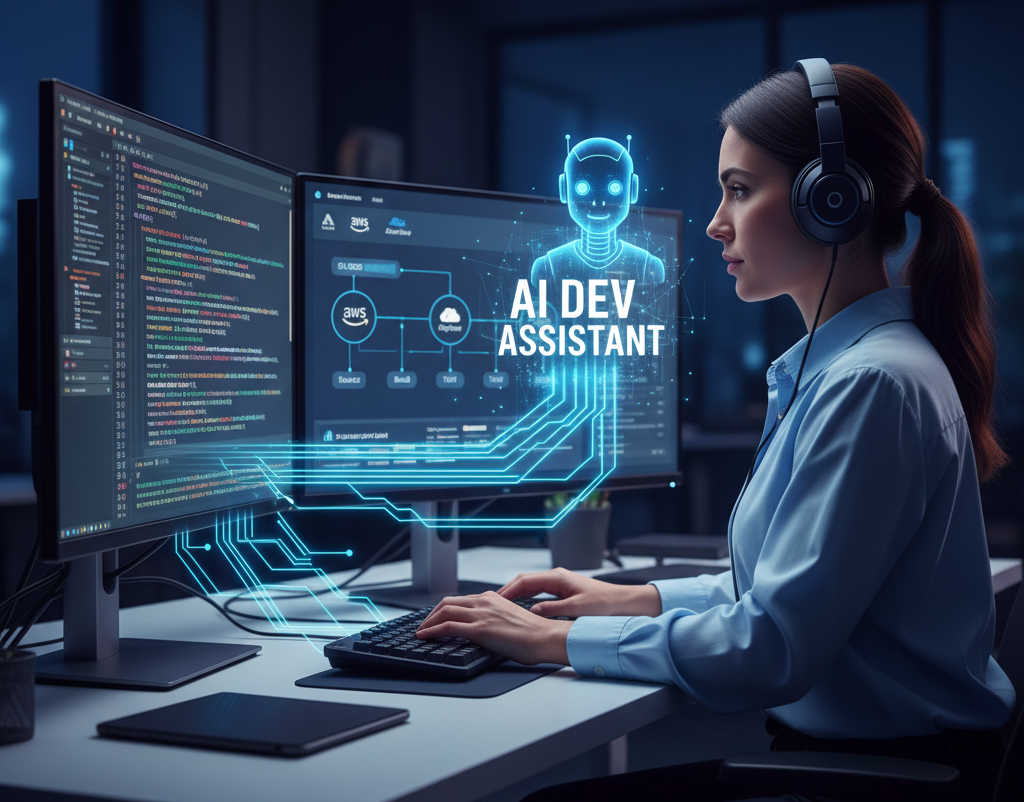
What Are AI Agents for Developers?
AI agents for developers are autonomous, goal-driven software entities designed to perform development-related tasks with minimal human supervision. Unlike traditional AI assistants that wait for explicit prompts, AI agents can initiate actions once a goal is provided. They analyze requirements, break down tasks into smaller executable steps, and carry out those steps systematically.
These agents function as digital engineers capable of performing a wide range of tasks. They can write new code, refactor existing codebases, generate documentation, execute tests, deploy applications, and monitor live systems. Their strength lies in their ability to reason, maintain long-term memory, and interact with real tools rather than just generating text.
Importantly, AI agents are not intended to replace human developers. Instead, they act as force multipliers, increasing productivity, reducing errors, and supporting faster delivery. Developers remain in control, while AI agents handle execution-heavy and repetitive responsibilities.
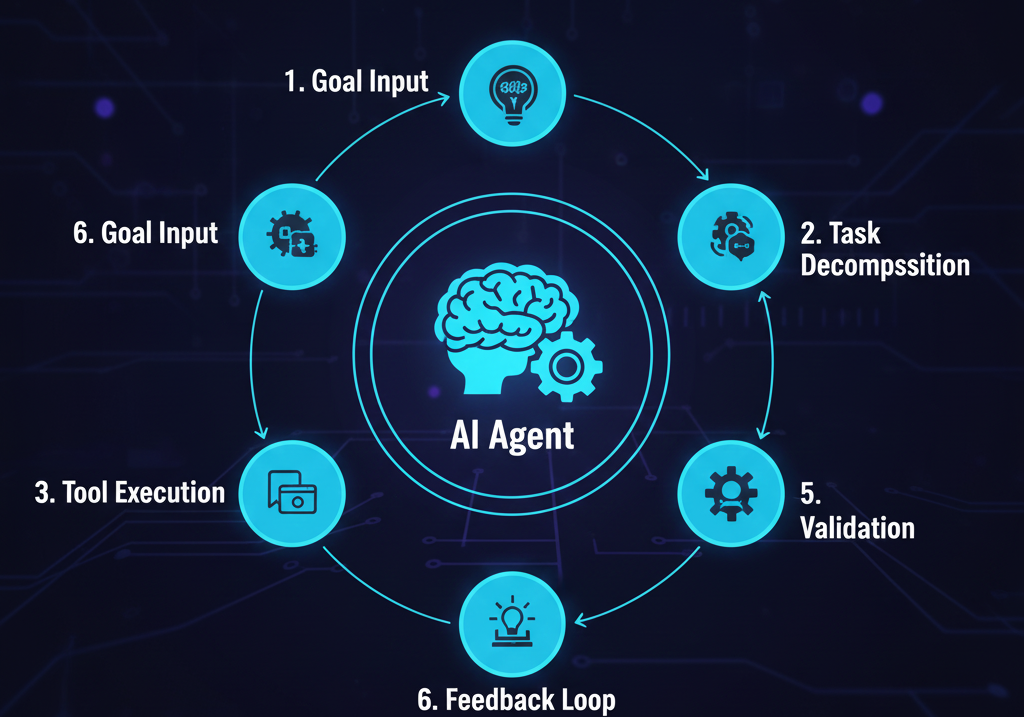
Core Architecture of AI Agents
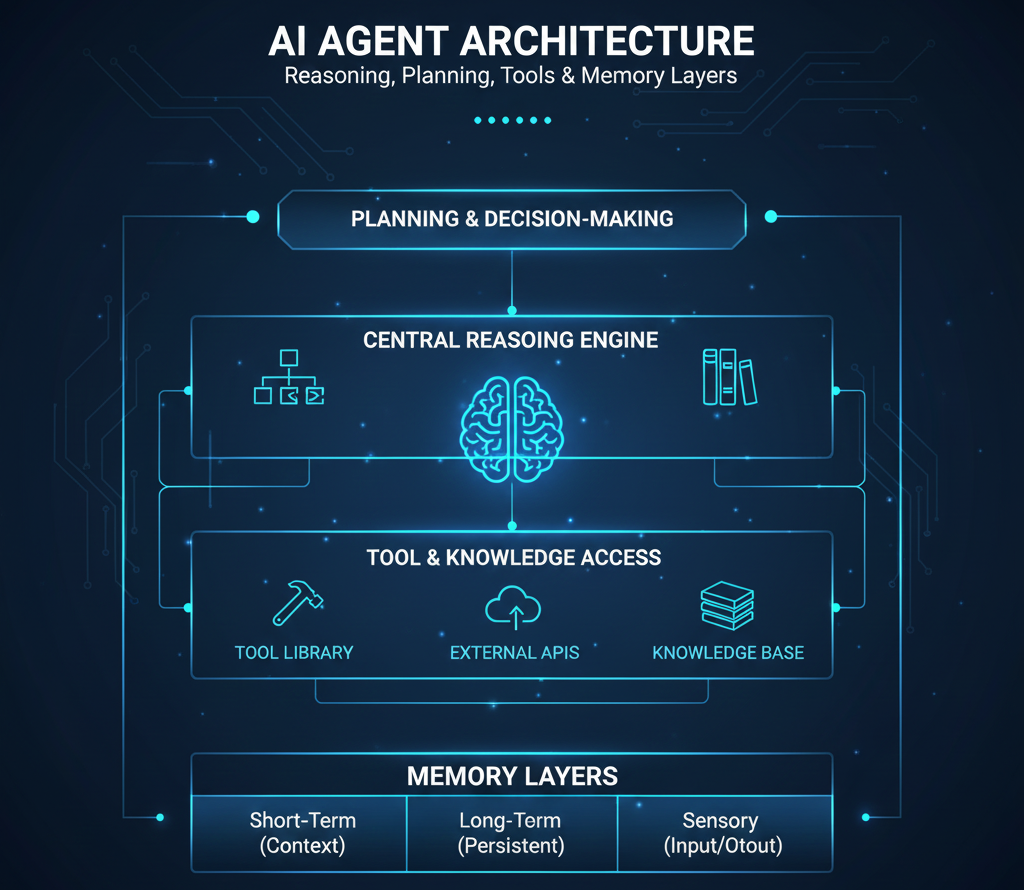
AI agents rely on a modular architecture composed of several interconnected components that enable intelligent and autonomous behavior. Each component plays a critical role in how the agent understands tasks and executes them effectively.
Reasoning Engine:
The reasoning engine is the cognitive core of an AI agent. It interprets tasks, analyzes constraints, evaluates multiple solution paths, and selects the most appropriate action. When errors occur, the reasoning engine diagnoses the problem and determines corrective steps. This allows agents to adapt dynamically instead of following static instructions.
Planning Module:
The planning module transforms high-level objectives into structured and executable steps. For example, when tasked with building an API, the agent plans activities such as designing endpoints, implementing business logic, writing tests, and deploying the service. This structured approach allows the agent to manage complex, multi-step workflows.
Tool Interface:
The tool interface allows AI agents to connect directly with real-world development environments. This includes IDEs, version control systems, APIs, databases, browsers, and cloud platforms. Through these connections, agents can perform real actions such as writing files, committing code, running tests, and deploying applications.
Memory System:
The memory system enables agents to store project context, coding standards, architectural decisions, and previous actions. This ensures consistency across the codebase and allows the agent to improve over time. Memory is especially important for long-term projects where maintaining continuity is critical.
Key Capabilities of AI Agents for Developers
1. Autonomous Task Execution
AI agents can independently execute tasks once a goal is defined. Developers no longer need to guide each step manually. The agent plans the workflow, executes required actions, validates outcomes, and iterates if necessary. This drastically reduces development time and increases efficiency.
Autonomous execution is particularly useful for repetitive tasks such as setting up project scaffolding, generating CRUD operations, running test suites, and deploying applications. By handling these tasks automatically, AI agents free developers to focus on problem-solving and innovation.
2. Context Awareness and Memory
AI agents maintain a deep understanding of project context, including file structures, dependencies, configuration settings, and prior changes. They remember coding standards, naming conventions, and architectural patterns used throughout the project. This ensures consistent output and prevents repeated mistakes.
Context awareness becomes increasingly valuable as projects grow in size and complexity. For long-term projects, AI agents provide continuity by retaining institutional knowledge that might otherwise be lost over time.
3. Tool and Environment Integration
AI agents integrate directly with development tools and environments. They can write and modify files in IDEs, commit changes to repositories, trigger CI/CD pipelines, deploy services to the cloud, and monitor system performance. This deep integration allows agents to perform real development work instead of merely suggesting solutions.
Because agents interact with actual tools, they bridge the gap between AI-generated output and production-ready execution.
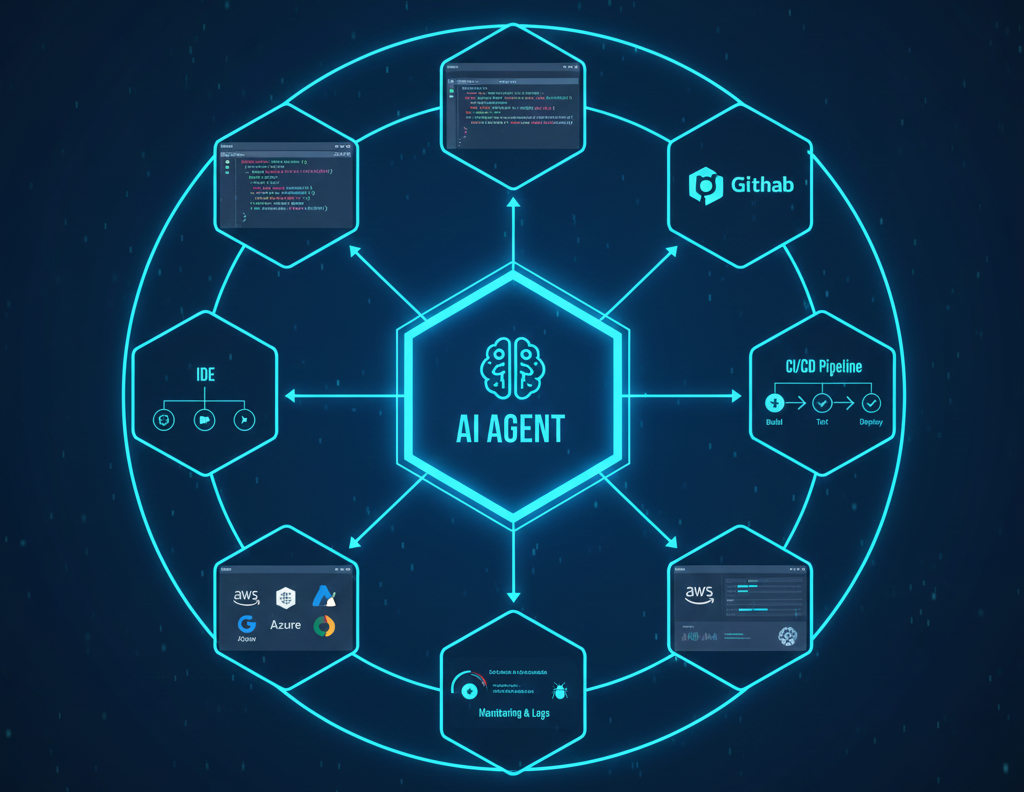
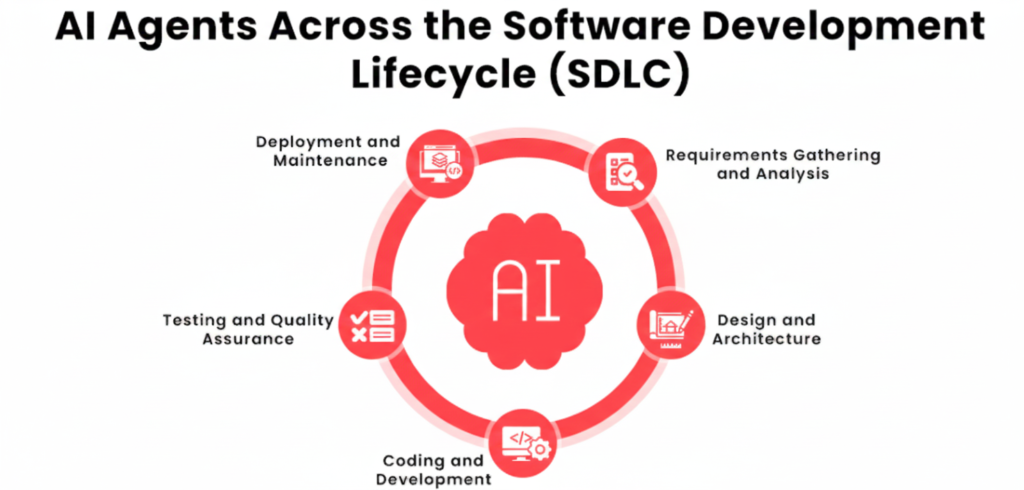
AI Agents Across the Software Development Lifecycle
AI agents support developers at every stage of the software development lifecycle, enabling continuous automation and optimization.
- Requirement Analysis: AI agents analyze specifications, identify dependencies, and suggest suitable architecture patterns early in the project.
- Code Generation: They generate clean, reusable, and maintainable code aligned with best practices.
- Refactoring: Agents improve code readability, performance, and structure as the project evolves.
- Testing: They create and execute automated test cases to validate functionality and catch bugs early.
- Deployment: AI agents manage CI/CD pipelines and automate cloud deployments.
- Monitoring: They track application performance, identify anomalies, and recommend optimizations.
Code Example: AI Agents in Action
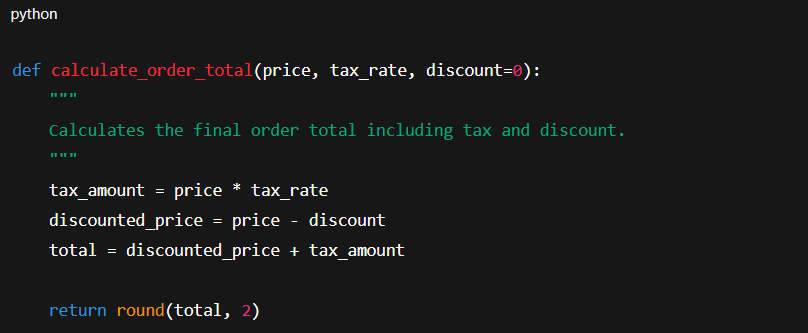
AI agents demonstrate their real value when they move beyond theory and perform actual development tasks. The following examples illustrate how AI agents assist developers by generating code, automating tests, debugging errors, and interacting with tools in a realistic development workflow.Lorem ipsum dolor sit amet, consectetur adipiscing elit. Ut elit tellus, luctus nec ullamcorper mattis, pulvinar dapibus leo.
AI Agent Generating Application Logic (Python)
How the AI agent helps:
- Understands business requirements
- Applies best coding practices
- Adds documentation and clean structure
- Reduces manual coding effort
Real-World Use Cases for Developers
AI agents are already being used across real-world development environments to handle both development and operational responsibilities.
- Automated bug detection and fixing
- Code quality analysis and enforcement
- API integration and documentation generation
- Infrastructure monitoring and scaling
- Security vulnerability scanning
These use cases demonstrate how AI agents handle both development and operational responsibilities.
Popular AI Agent Frameworks for Developers
Several frameworks enable developers to build and deploy AI agents efficiently.
AutoGPT: Enables fully autonomous agents capable of pursuing complex programming goals.
LangChain: Provides modular tools for building production-ready AI agents with memory and tool access.
CrewAI: Supports multi-agent collaboration, mirroring human development teams.
OpenAI Assistants API: Allows structured agent creation with controlled tool access.
Benefits of AI Agents for Development Teams
AI agents dramatically increase productivity by automating repetitive and time-consuming tasks that traditionally consume a large portion of a developer’s day. Activities such as writing boilerplate code, running test suites, formatting code, managing deployments, and monitoring logs can be handled automatically by AI agents. This automation shortens development cycles and allows teams to deliver features faster without compromising quality.
Another major benefit is improved code quality and consistency. AI agents follow predefined coding standards, architectural guidelines, and best practices across the entire project. They detect errors early through continuous testing and static code analysis, reducing the number of bugs that reach production. This results in more stable applications and fewer emergency fixes after deployment.
AI agents also enable teams to scale efficiently without increasing headcount. As workloads grow, AI agents can handle additional tasks simultaneously without fatigue or performance degradation. This scalability helps organizations control operational costs while maintaining high output. Small teams can achieve enterprise-level productivity with the support of intelligent agents.
Additionally, AI agents play a crucial role in reducing developer burnout. By taking over routine, repetitive, and mentally exhausting tasks, they allow developers to focus on creative problem-solving, system design, and innovation. This leads to higher job satisfaction, improved morale, and stronger long-term team performance.
Responsible Use and Human Oversight
Despite their advanced capabilities, AI agents must be used responsibly to ensure reliability, security, and ethical operation. While AI agents can execute tasks autonomously, developers should always maintain final authority over critical decisions such as production deployments, security configurations, and architectural changes. Human review remains essential for high-impact actions.
Clear operational boundaries must be defined to control what an AI agent is allowed to access and modify. This includes restricting permissions for sensitive data, limiting write access to production systems, and enforcing approval workflows for critical changes. These boundaries prevent unintended consequences and maintain system integrity.
Continuous monitoring is another key aspect of responsible AI agent usage. Logging, auditing, and performance tracking allow teams to understand agent behavior and quickly detect anomalies. Monitoring ensures that AI agents operate within expected parameters and align with organizational policies and ethical standards.
When AI agents are used as collaborative assistants rather than fully independent decision-makers, they deliver maximum value with minimal risk. This human-in-the-loop approach combines the speed and efficiency of automation with human judgment, resulting in safer, more reliable, and more effective development workflows.

Conclusion
AI agents for developers represent a fundamental shift in software engineering. By combining autonomy, reasoning, memory, and deep tool integration, AI agents in software development are transforming how applications are built, deployed, and maintained. These autonomous AI agents move beyond simple automation by actively executing tasks, adapting to project context, and improving workflows across the development lifecycle.
Developers who adopt AI agents for developers gain significant advantages in speed, scalability, and productivity, while reducing manual effort and operational complexity. Supported by modern AI agent frameworks for developers, these systems enable teams to build smarter, more resilient software at scale. As AI technology continues to evolve, AI agents will become essential partners in modern software development workflows, shaping the future of autonomous engineering.