AI in Software Testing & Quality Assurance
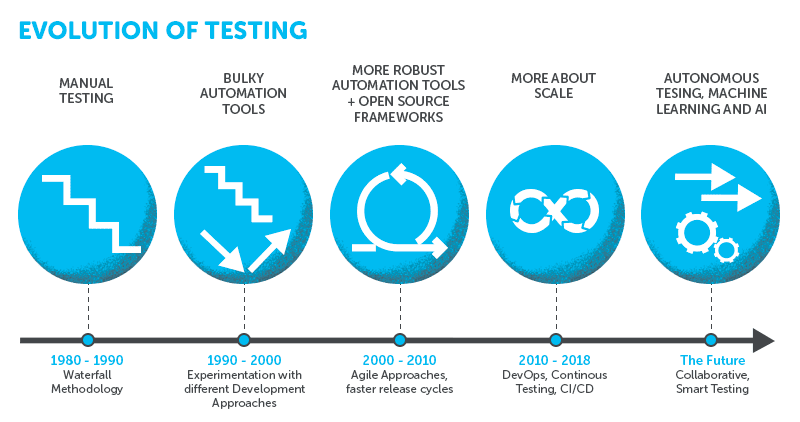
Artificial Intelligence in Software Testing and Quality Assurance plays a major role in shaping modern digital engineering, especially in industries where applications must operate at high performance, reliability, and scalability. Traditional testing approaches often struggle to keep pace with continuously evolving systems, frequent updates, multi-device environments, and large-scale user traffic. AI helps overcome these challenges by introducing intelligent automation, adaptive testing, predictive defect analysis, and smart quality governance. It allows testing teams to process vast amounts of execution data, learn from historical failures, detect behavioral patterns, optimize regression coverage, and focus testing efforts on critical risk areas. AI-powered tools also enable test scripts to automatically adjust when UI or system components change, significantly reducing test maintenance effort. As organizations move toward Agile, DevOps, and CI/CD, AI-driven testing becomes essential for maintaining reliability and quality assurance throughout rapid release cycles. It transforms QA from a manual verification activity into a proactive, intelligence-based engineering discipline that contributes directly to business innovation and customer satisfaction.
What is AI-Powered Software Testing?
AI-powered software testing refers to the integration of machine learning, deep learning, natural language processing, and predictive analytics into the testing lifecycle to make it more intelligent, scalable, and data-driven. Instead of relying only on predefined automation scripts, AI systems can understand user interactions, analyze execution logs, detect recurring defect patterns, and automatically suggest or generate relevant test cases. AI-based testing tools are capable of prioritizing high-risk modules, identifying redundant or overlapping test scenarios, clustering similar defects, and recommending optimization strategies that reduce testing effort while increasing coverage. These capabilities enable smarter decision-making, improved resource allocation, faster validation cycles, and enhanced product stability.
Key Points
- Automatically generates test cases from requirements and documentation
- Learns from previous execution data and improves continuously
- Detects failure trends and predicts defect-prone components
- Optimizes regression suites to remove redundant test runs
- Supports automation script maintenance using self-healing logic
Applications of AI in Software Testing
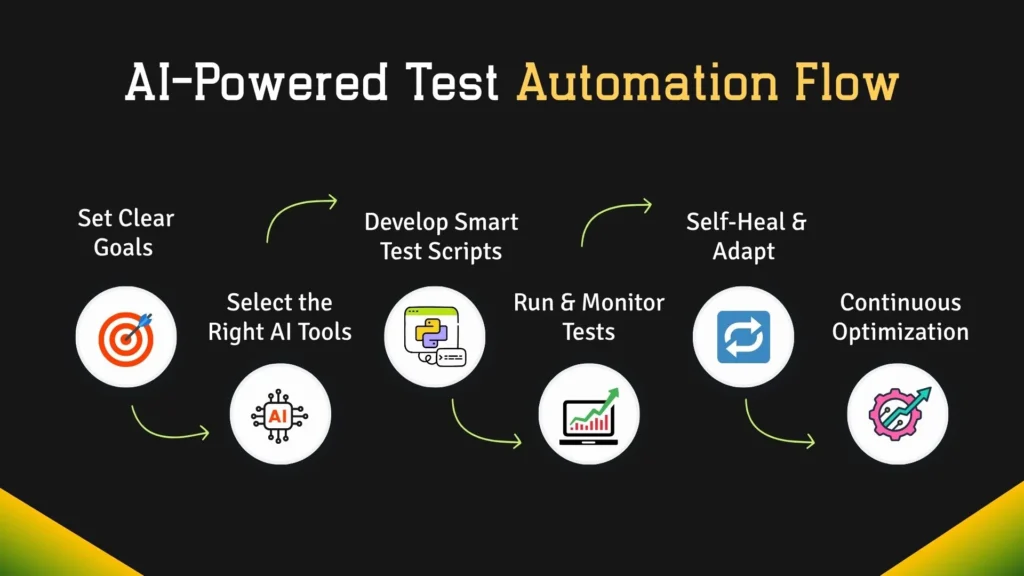
AI is implemented across multiple testing domains, enabling streamlined workflows and advanced analysis. In automated test case generation, AI scans requirement documents, acceptance criteria, and user journeys to create functional and regression scenarios. During execution, AI selects the most impactful test cases based on risk level and system changes, reducing execution time while preserving coverage. Self-healing automation allows UI locator changes, page structure modifications, and element reconfiguration to be detected and corrected automatically, improving script durability. AI-driven test data generation creates realistic user data variations, edge-case scenarios, and boundary conditions for improved accuracy. In performance testing, AI analyzes system load behavior, throughput variation, latency spikes, and anomaly patterns to predict performance degradation before failure occurs.
Key Points
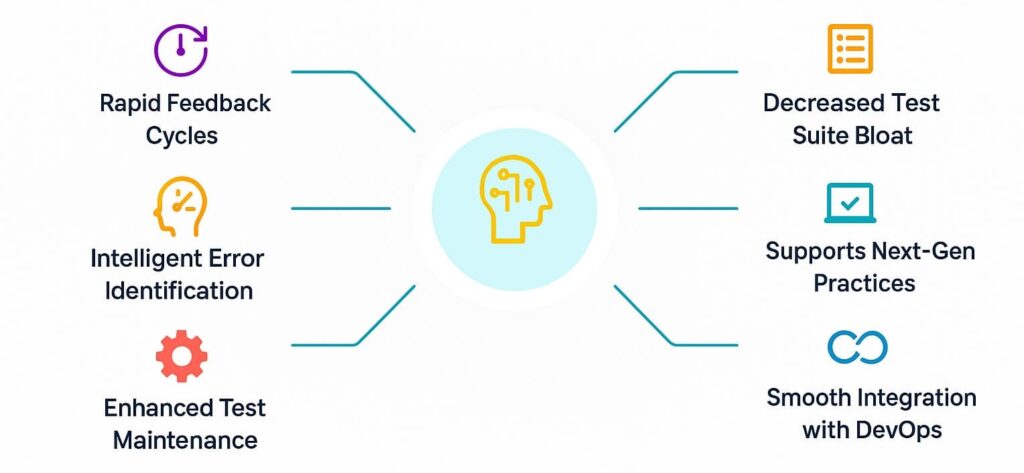
- Automated regression optimization and execution scheduling
- Intelligent UI testing with script self-healing capabilities
- AI-based test data generation and scenario expansion
- Early performance degradation detection and load pattern analysis
- Risk-based testing and defect forecasting in advance
Real-World Impact of AI in Software Testing
AI-driven testing is now widely adopted across enterprise environments and mission-critical applications. In large e-commerce systems, AI verifies recommendation accuracy, checkout flow stability, search performance, personalization algorithms, and fraud detection workflows. Banking platforms use AI testing to validate transaction security, authentication reliability, compliance standards, and real-time risk detection. Healthcare applications depend on AI-assisted QA to ensure accurate patient data processing, clinical workflow integrity, security validation, and HIPAA-compliant data handling. Telecom networks and cloud infrastructure environments use AI-based simulation bots to validate heavy-traffic behavior, multi-network compatibility, and service continuity under stress. Mobile and cross-platform applications rely on AI testing to evaluate UI consistency, gesture response, device adaptability, latency trends, and user engagement behavior.
Key Points - Business Advantages of AI QA
- Enhances product reliability across large and complex systems
- Reduces production defects and release cycle risks
- Improves compliance accuracy and audit traceability
- Supports continuous delivery and faster go-to-market timelines
- Strengthens customer trust and long-term product stability
Technical Perspective - How AI Enhances Testing Processes
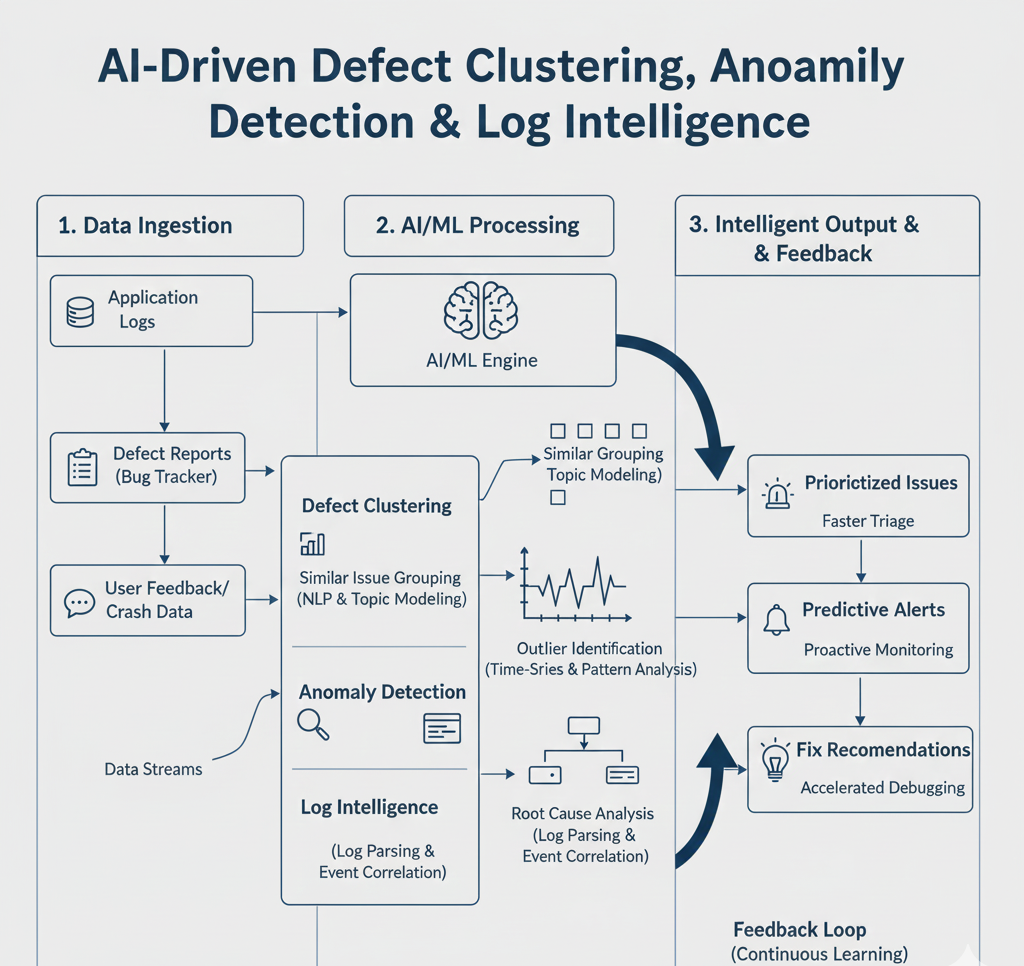
From a technical viewpoint, AI enhances test development and execution through intelligent parsing of logs, telemetry data, code changes, and application events. Machine learning models classify defects, group similar failure signatures, and help engineers trace the root cause faster. AI-powered anomaly detection observes real-time application performance and automatically flags unusual response deviations or bottlenecks. Natural language processing allows AI to interpret human-written test cases and transform them into executable steps, supporting business analysts and testers who may not be automation experts. AI tools also assist in environment monitoring, continuous quality dashboards, pipeline validation, and automated reporting. These capabilities significantly reduce investigation time, minimize manual overhead, and shift QA into a continuous engineering mindset.
Key Points - Technical Contributions of AI Testing
- Faster root cause analysis using automated defect clustering
- Real-time anomaly detection in logs and performance metrics
- Natural language test understanding and conversion to automation
- Continuous monitoring across CI/CD environments
- Automated quality analytics and reporting intelligence
Challenges and Considerations in AI Testing
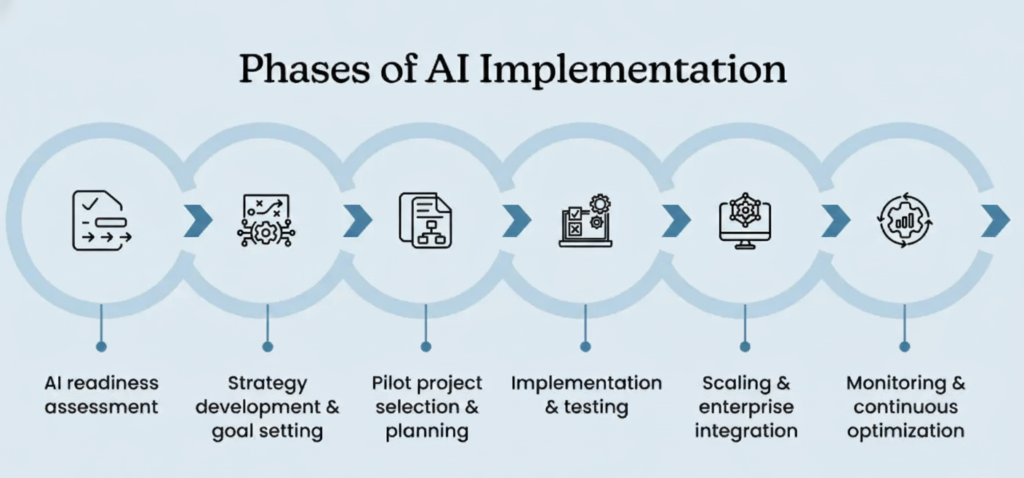
Although AI brings major advancements, organizations must address certain challenges during adoption. AI testing models require large, high-quality datasets for training, and inaccurate data can impact prediction quality. Integrating AI tools with existing automation frameworks may require architectural changes and process realignment. QA professionals must develop new skills related to data interpretation, ML model behavior, and AI-assisted decision-making. Transparency and explainability are also important, as AI test recommendations should remain understandable and auditable. To ensure effective implementation, organizations should begin with pilot projects, gradually scale across systems, and continuously evaluate AI model outcomes.
Key Points - Challenges to Manage
- Requires reliable datasets and monitoring of AI accuracy
- Integration with legacy automation may be complex
- Demands upskilling of QA teams and analysts
- Ethical transparency and explainability must be ensured
- Adoption should follow phased, strategic implementation
Conclusion
Artificial Intelligence in Software Testing and Quality Assurance represents a long-term evolution of the software validation process, moving it away from repetitive manual execution toward intelligent, adaptive, and predictive engineering practices. AI empowers testers by automating routine activities, improving defect discovery accuracy, strengthening regression resilience, and supporting continuous delivery at enterprise scale. Rather than replacing human testers, AI enhances their capability by providing insights, risk signals, performance intelligence, and data-driven decision support. As software ecosystems expand across cloud platforms, cybersecurity domains, IoT networks, enterprise applications, and digital services, AI-powered QA will become a foundation of sustainable product reliability and operational stability. Organizations that invest in AI-driven testing maturity will achieve stronger quality governance, faster innovation cycles, reduced operational costs, and a significant competitive advantage in the future technology landscape.