How AI Helps Developers Write Cleaner Code
Artificial Intelligence has become one of the most influential forces in modern software engineering, reshaping how developers design, write, test, optimize, and maintain code across enterprise systems, cloud platforms, automation frameworks, and large-scale digital applications. Rather than functioning only as a coding shortcut or suggestion tool, AI now acts as a strategic engineering partner that supports developers in building cleaner, clearer, and more sustainable code architectures.
Cleaner code refers to software that is easy to understand, logically structured, optimized for performance, free from unnecessary complexity, and capable of evolving smoothly across future updates and system expansions. In large organizations and long-term software projects, messy or poorly structured code can lead to significant operational challenges such as unpredictable failures, high debugging costs, limited scalability, technical debt accumulation, and difficulty in onboarding new developers. AI helps reduce these risks by analyzing code quality at multiple levels syntax, logic flow, structural integrity, design patterns, and runtime behavior and by guiding developers toward better engineering decisions from the earliest stages of development.
AI-powered coding tools learn from millions of programming repositories, best-practice libraries, industry coding standards, and real-world development scenarios. This allows them to deliver intelligent recommendations that improve code readability, modularity, security, maintainability, and long-term lifecycle resilience. As development environments evolve toward automation-driven workflows, AI becomes essential not only for increasing speed but also for elevating the structural quality and professional standard of software engineering.
AI as a Smart Coding Assistant
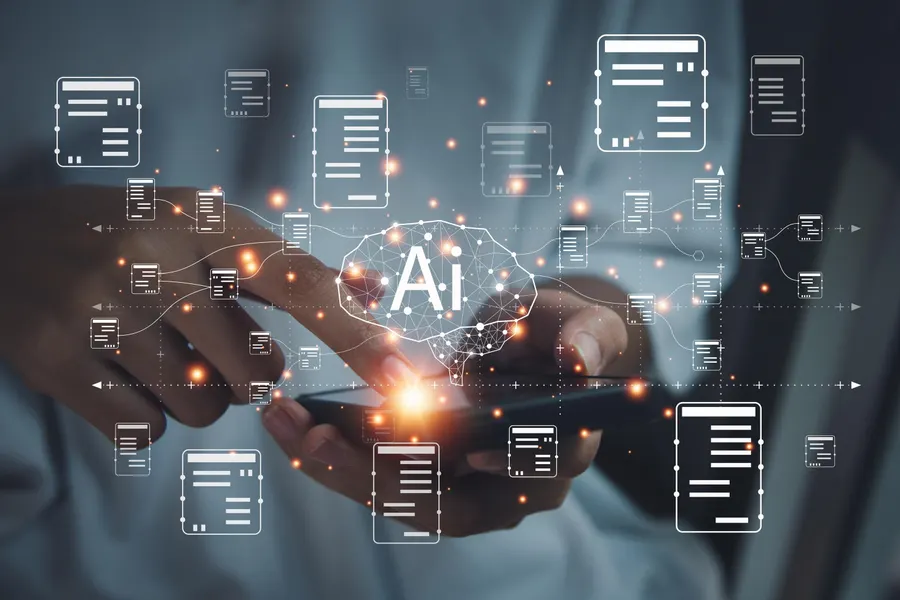
AI coding assistants do far more than generate code snippets they help developers improve thinking patterns, structural decisions, and logical organization within programs. These tools can analyze how functions relate to each other, detect unnecessary nesting, identify repetitive blocks, and suggest modular structures that promote reusability and readability.
Instead of allowing bloated functions or deeply nested conditions to accumulate, AI encourages developers to follow principles like separation of concerns, minimal complexity, and consistent naming standards. This leads to codebases that are easier to interpret, maintain, and refactor, even in long-term enterprise environments where multiple developers work on the same system.
AI tools are capable of understanding intent and context meaning they can suggest cleaner abstractions, better object relationships, and clearer architectural boundaries. This strengthens not only the quality of individual files but the integrity of the overall application structure.
Key Points - How AI Supports Better Code Structuring
- Suggests modular and reusable function structures
- Improves naming clarity for variables, classes, and methods
- Highlights redundant or duplicated logic paths
- Encourages minimal, expressive, and readable code
- Enhances collaboration across engineering teams
AI-Powered Code Review & Static Analysis
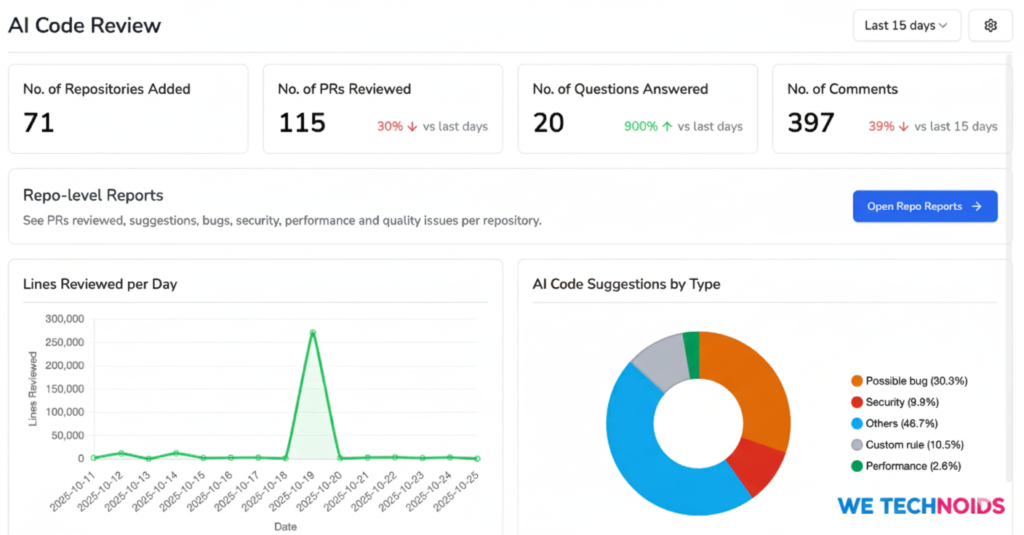
Manual code reviews are essential in software teams, but they are often limited by time constraints, human bias, or overlooked details. AI-powered code review systems analyze massive volumes of code in seconds, identifying risks such as incorrect logic conditions, unhandled exceptions, memory leaks, unsafe operations, or security vulnerabilities that might not be immediately visible to reviewers.
These systems apply predictive intelligence based on historical patterns, real-world bug data, and programming best practices allowing them to propose corrective improvements early in the development lifecycle. When connected to CI/CD pipelines, AI code review tools continuously monitor new commits, preventing weak or unstable code from entering production environments.
Organizations benefit significantly, as fewer post-release defects mean reduced downtime, fewer hotfix cycles, greater system reliability, and stronger end-user trust.
Key Points
- Detects vulnerabilities and hidden logic errors early
- Reduces production defects and debugging cycles
- Strengthens code reliability and application stability
- Enhances engineering discipline and quality standards
- Supports continuous improvement in coding practices
AI for Code Refactoring - Eliminating Redundancy & Technical Debt
As software evolves, features are added, logic becomes layered, and systems expand often leading to technical debt. Over time, code may become repetitive, outdated, or structurally inefficient. AI-driven refactoring tools analyze relationships between modules, APIs, functions, and dependent components to identify inefficiencies and suggest cleaner alternatives.
These tools recommend extraction of reusable code segments, simplified logic restructuring, conversion of legacy patterns, and architectural re-alignment without altering application behavior. This process helps ensure that software can grow without becoming fragile or unstable.
By minimizing unnecessary complexity, AI enables software teams to maintain cleaner internal design, faster development cycles, and a more predictable evolution path for future releases.
Key Points - How AI Improves Refactoring Quality
- Identifies duplicated and inefficient code sections
- Recommends modular reusable components
- Improves maintainability and design consistency
- Reduces system complexity and memory overhead
- Extends software lifecycle and scalability potential
AI in Testing & Bug Detection
Clean code does not simply mean readable structure it also means predictable and stable runtime behavior. AI-based testing platforms analyze application execution patterns, user interactions, and edge-case conditions to identify fragile logic segments or failure-prone operations.
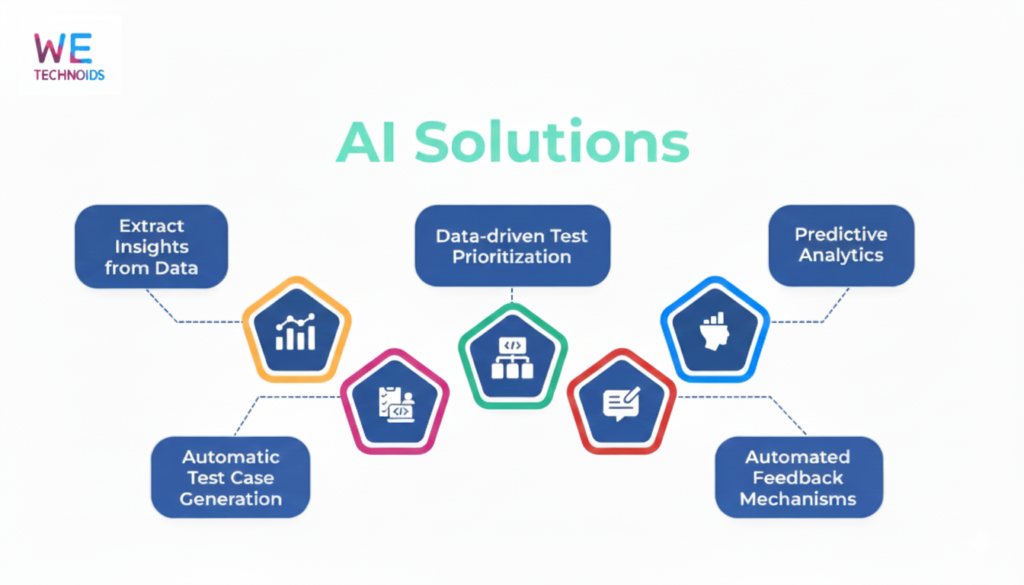
AI can auto-generate unit tests, regression tests, and functional scenarios based on real-world behavioral patterns, ensuring higher coverage and deeper validation than manually written tests alone. These tools can also predict areas of potential failure before defects occur, strengthening reliability across environments.
This helps reduce runtime crashes, unexpected behavior, security exposure, and unstable feature rollouts all of which are direct indicators of poorly structured or weakly validated code.
Key Points
- Auto-generates meaningful unit and regression tests
- Detects failure-prone logic and boundary conditions
- Improves stability, coverage, and functional confidence
- Prevents runtime conflicts and unexpected crashes
- Strengthens software reliability in production environments
AI for Performance Optimization
Clean code must also be efficient. AI-powered performance analyzers evaluate factors such as CPU usage, memory allocation, threading behavior, database interactions, caching efficiency, and response latency. They help developers detect heavy processing loops, inefficient algorithms, large object allocations, and slow network calls that degrade application responsiveness.
AI tools recommend alternative algorithms, asynchronous execution models, optimized data structures, and improved resource management strategies resulting in faster execution and better scalability.
This is especially important for large applications, real-time systems, cloud-native services, and enterprise environments where performance and stability are directly linked to business outcomes.
Key Points - Performance Benefits of AI-Guided Optimization
- Reduces runtime overhead and latency issues
- Improves resource utilization and execution efficiency
- Prevents bottlenecks caused by inefficient algorithms
- Enhances application responsiveness and scalability
- Supports performance-oriented engineering culture
AI for Documentation & Knowledge Transfer
Documentation is one of the most critical yet often neglected aspects of clean coding. Without proper explanations, even well-structured code becomes difficult to maintain or transfer across teams. AI tools now generate inline documentation, architectural summaries, function-level explanations, and natural-language interpretations of complex logic.
This strengthens onboarding for new developers, simplifies project handovers, and preserves institutional knowledge across long-term development cycles. AI-based documentation ensures that code remains understandable not only today but years into the future as teams evolve and systems expand.
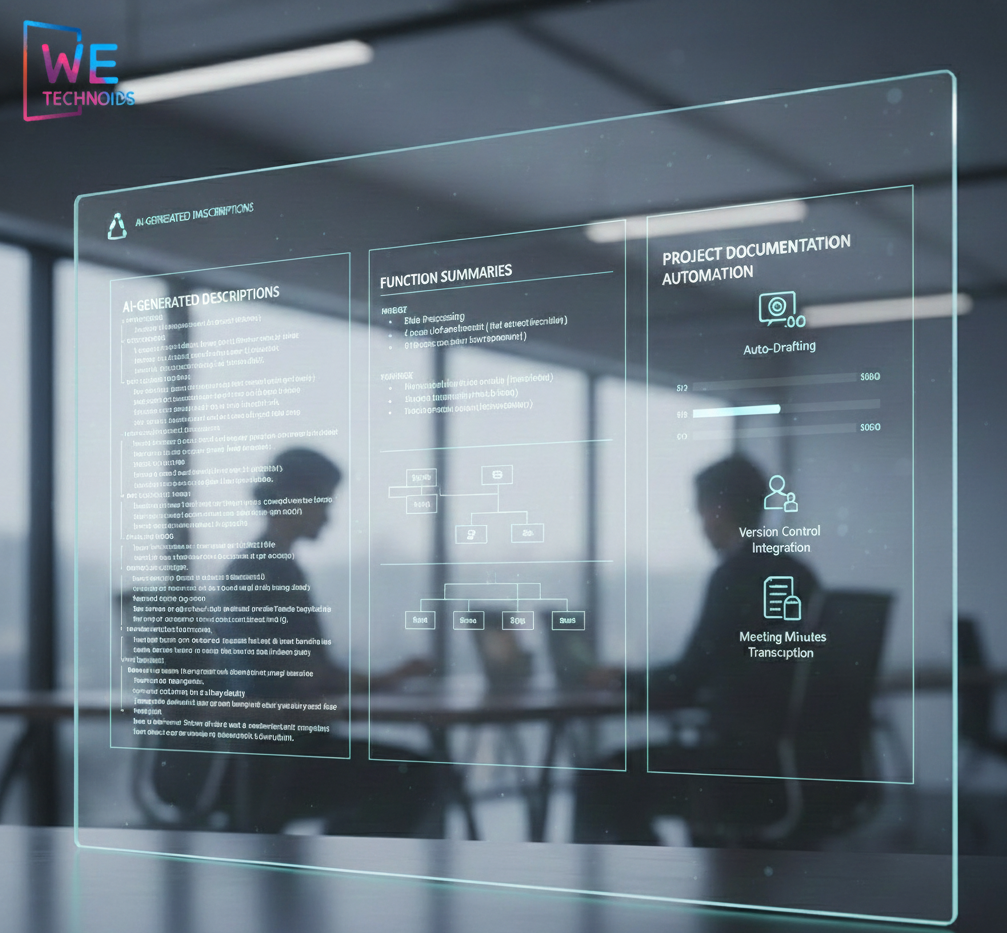
Key Points - AI’s Role in Documentation Quality
- Generates structured function and module descriptions
- Improves onboarding for new developers
- Preserves architectural knowledge across teams
- Supports long-term maintainability and clarity
Conclusion
AI is reshaping the way developers write, review, optimize, and maintain code. Instead of replacing human creativity, it enhances engineering intelligence guiding developers toward cleaner structure, stable logic, efficient performance, and long-term sustainability. By integrating AI across coding, reviewing, refactoring, testing, optimization, and documentation workflows, organizations can build software that is not only functional but also scalable, secure, resilient, and professionally engineered for future growth.
Cleaner code means fewer failures, faster delivery cycles, improved collaboration, and stronger digital reliability and AI has become one of the most powerful enablers of this transformation.