Prompt Engineering for Developers
Introduction
In the modern era of artificial intelligence–powered software development, prompt engineering has evolved into one of the most valuable skills for developers, engineers, architects, and technology professionals. Unlike traditional programming where developers directly write logic using programming syntax prompt engineering focuses on how developers design intelligent, structured, and well-defined instructions that guide AI models to generate meaningful, accurate, and context-aware results. These prompts are not random messages or basic commands; they are carefully constructed inputs that include technical context, problem objectives, coding standards, architectural rules, and real-world software constraints, ensuring that the AI produces output that aligns with professional development practices rather than abstract or theoretical responses.
Developers across every domain web development, backend engineering, mobile apps, data science, DevOps, cybersecurity, automation, enterprise systems, and cloud computing now interact with AI tools such as ChatGPT, GitHub Copilot, Gemini, CodeWhisperer, and other large language model platforms. Without structured prompting, these tools may generate vague, incomplete, or technically inconsistent results. Prompt engineering solves this challenge by helping developers communicate with AI in a precise, logical, and engineering-oriented way, transforming AI from a simple text generator into a powerful collaborative programming assistant.
A strong prompt not only explains what needs to be done, but also why it matters, what constraints exist, how performance should behave, what coding patterns should be followed, and how edge cases must be handled. This makes AI more predictable, more consistent, and more aligned with real-world project needs. Instead of replacing developers, prompt engineering empowers them enabling faster development cycles, improved problem-solving, higher code quality, better documentation, optimized debugging workflows, and more intelligent software design.
As AI continues to integrate into every development environment from code editors and pipelines to deployment platforms and testing frameworks prompt engineering is rapidly becoming a core engineering competency. Developers who master it gain a competitive industry advantage by working smarter, building cleaner systems, collaborating efficiently with AI tools, and designing future-ready software solutions in an evolving technological landscape.
What is Prompt Engineering?
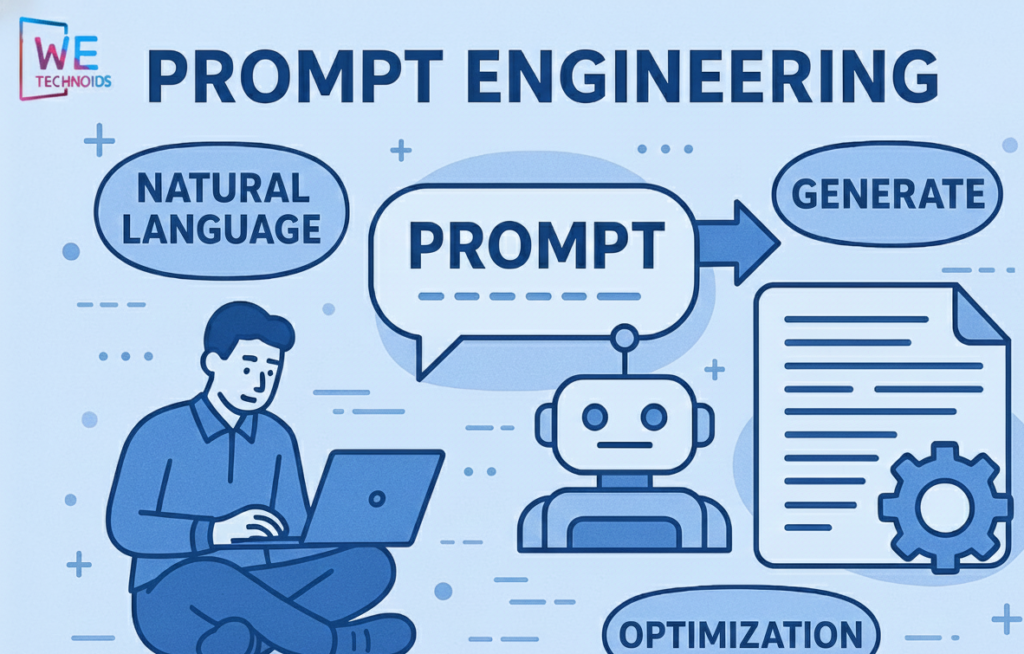
Prompt engineering is the process of designing structured, meaningful, and context-rich instructions that guide AI systems to produce accurate, relevant, and technically correct outputs. Instead of giving short or vague commands, developers provide prompts that define the programming language, framework, environment, expected logic behavior, performance constraints, project requirements, and output format. This transforms AI responses from generic or approximate solutions into predictable results that closely match software engineering standards.
At its core, prompt engineering requires developers to think like system designers considering architecture, constraints, dependencies, problem structure, and expected outcomes. It encourages reasoning-driven communication rather than task-only requests. When prompts are constructed with clarity, precision, and technical direction, AI becomes capable of functioning as a supportive coding partner capable of explaining logic, preventing mistakes, optimizing performance, and improving overall development quality.
Prompt engineering is not just about interacting with AI it is about teaching AI how to think in alignment with engineering principles.
Key Points
- Helps developers control AI behavior and output quality
- Reduces ambiguity and incorrect responses
- Produces structured, clean, and maintainable code
- Enhances engineering decision-making
- Transforms AI into a disciplined technical assistant
Why Prompt Engineering Matters for Developers
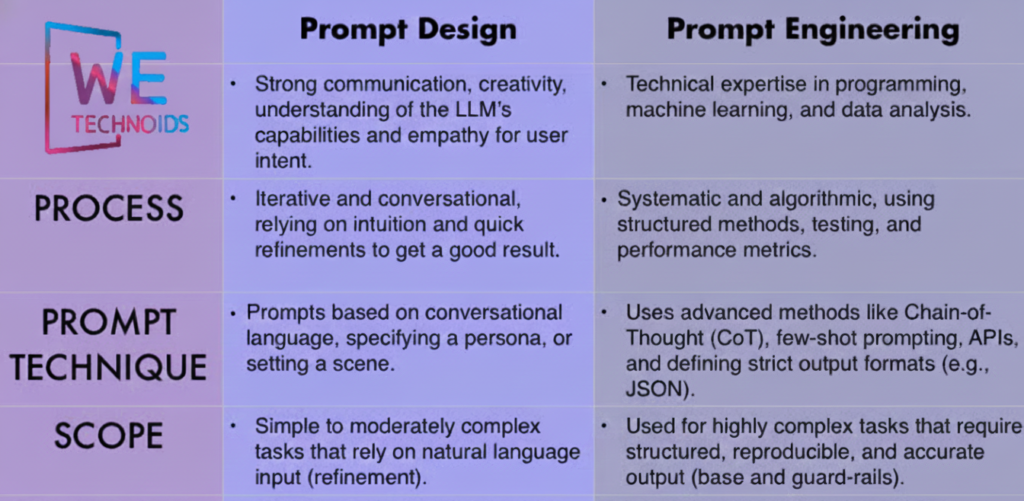
Prompt engineering has become essential in software development because AI does not automatically understand development context unless humans define it. When developers use vague prompts, they receive random or partial solutions. But when they use structured prompts, AI delivers accurate, optimized, and production-ready outputs that align with professional development standards.
For developers, prompt engineering helps in:
- Writing clean, modular, and reusable code
- Reducing debugging time and technical effort
- Improving performance and code readability
- Refactoring large projects more efficiently
- Generating documentation and test coverage
- Supporting architectural and design decisions
- Automating repetitive coding tasks
Key Points
- Improves productivity in real-world projects
- Enhances problem-solving accuracy
- Reduces manual workload and repetition
- Integrates AI into professional workflows
- Supports scalable and maintainable systems
Code Generation & Development Prompts
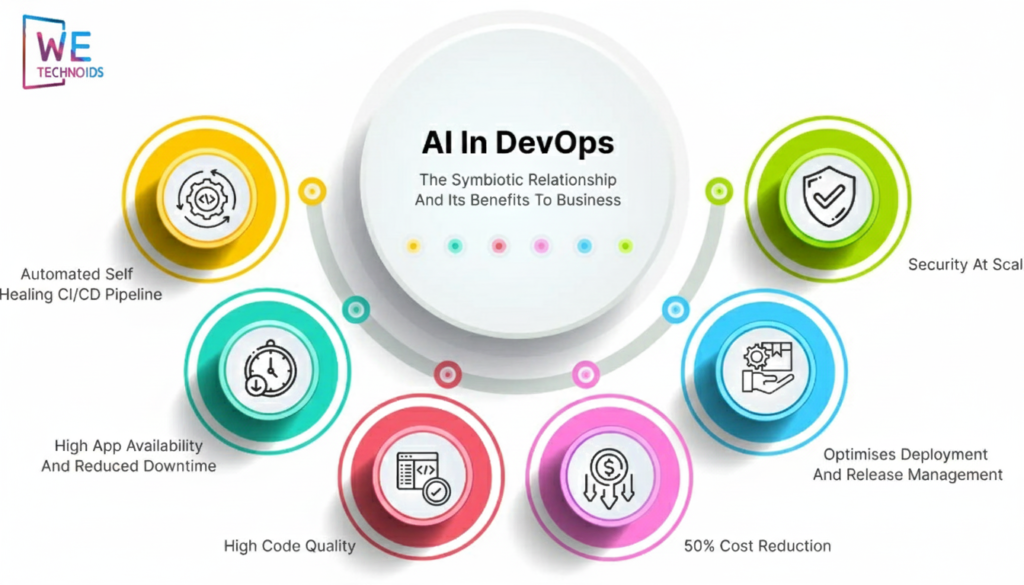
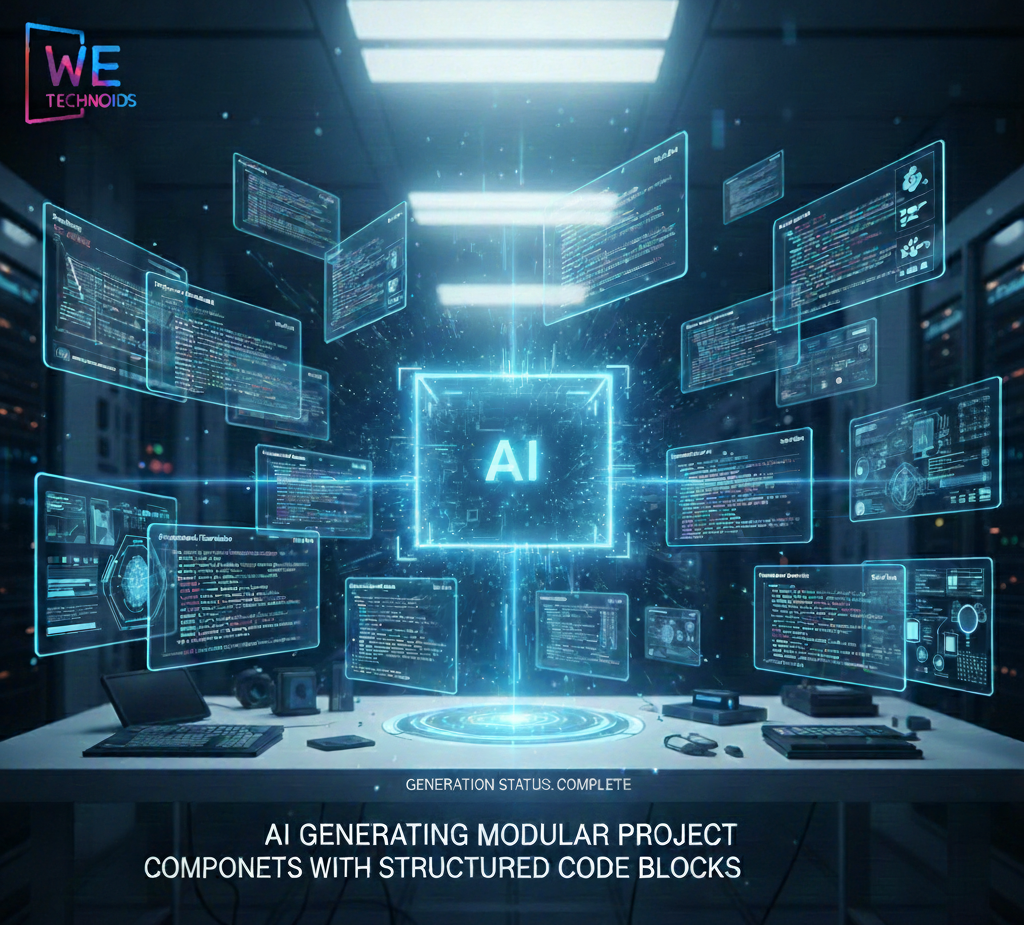
Code generation prompts enable developers to collaborate with AI when writing functions, backend services, UI components, automation scripts, modules, and microservices. Instead of requesting simple sample programs, developers provide structured prompts that include programming language requirements, architecture details, project role of the code, error handling expectations, scalability considerations, and performance boundaries.
When a prompt includes instructions such as:
- Use modular structure instead of monolithic code
- Follow clean-code and naming conventions
- Handle edge cases and invalid inputs
- Ensure readability and reusability
- Maintain consistent coding standards
Such prompts help maintain consistency across entire codebases and ensure that generated components fit logically into larger systems. Over time, developers refine prompts based on feedback and output review creating a continuous improvement loop where AI becomes more aligned with project style and technical expectations.
Advantages
- Produces clean, scalable, and maintainable code
- Ensures consistent structure in large projects
- Reduces repetitive coding work
- Supports modular and reusable development
- Saves development time while preserving quality
Debugging & Problem-Solving Prompts
Debugging prompts help developers identify logic flaws, runtime issues, hidden bugs, and performance bottlenecks much faster than traditional debugging alone. Instead of only asking the AI to “fix errors,” developers submit structured prompts that describe the problem behavior, execution environment, failing conditions, and expected vs actual outcomes.
AI then evaluates:
- Logic inconsistencies
- Missing error handling
- Inefficient loops or conditions
- Memory and performance issues
- Edge case failures
More importantly, debugging prompts encourage explanation before correction. This means AI clarifies why an issue occurs, how it affects other components, and what solution prevents similar issues in the future.This approach improves developer understanding rather than simply applying patches, making it especially valuable in complex systems, legacy applications, and distributed architectures.
Advantages
- Faster detection of hidden logic errors
- Provides reasoning instead of blind fixes
- Enhances learning and code comprehension
- Improves long-term system stability
- Reduces debugging complexity in large systems
Refactoring & Optimization Prompts
Refactoring prompts help developers restructure and optimize existing code without changing functional behavior. These prompts encourage AI to simplify complex logic, separate responsibilities, eliminate duplicate code, improve naming consistency, and align code with SOLID, DRY, KISS, and clean-code principles.
Developers also include constraints such as:
- Preserve existing functionality
- Improve readability and maintainability
- Reduce redundancy and coupling
- Increase performance efficiency
- Maintain backward compatibility
AI assists in breaking down large functions, modularizing code structures, and enhancing architectural organization which is especially valuable in enterprise-scale and long-term projects where code evolves continuously.Refactoring prompts don’t just clean code they strengthen collaboration, reduce technical debt, and improve developer experience.
Advantages
- Produces cleaner and more readable code
- Enhances performance and efficiency
- Prevents long-term technical debt
- Supports scalable system architecture
- Improves collaboration across development teams
Documentation & Knowledge Transfer Prompts
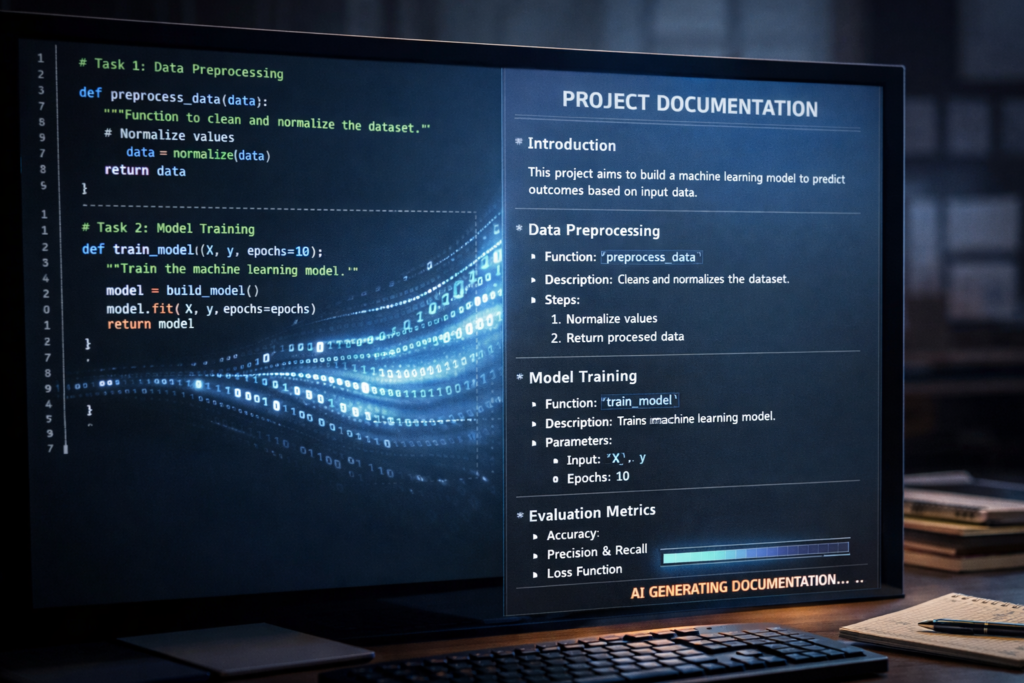
Documentation prompts convert complex code and system logic into clear, structured explanations that support collaboration, onboarding, and long-term maintenance. Developers use them to generate:
- Function and class descriptions
- API endpoint documentation
- Module behavior explanations
- Technical walkthroughs & architecture notes
When prompts specify target audience, tone, and format, AI generates documentation that matches organizational standards instead of generic summaries.In enterprise ecosystems, where large teams, distributed environments, and evolving systems exist documentation prompts help preserve knowledge, reduce onboarding time, and ensure development continuity even when team members change.They also improve transparency, accountability, and project governance making them essential in professional engineering environments.
Advantages
- Improves communication across teams
- Preserves technical knowledge for future developers
- Reduces onboarding & handover challenges
- Ensures structured and consistent documentation
- Supports enterprise development workflows
Future of Prompt Engineering for Developers
The future of software development is shifting toward intelligent collaboration between developers and AI systems. Prompt engineering will evolve into:
- Context-aware coding environments
- AI-assisted architecture & design systems
- Automated debugging & optimization engines
- Multi-agent development assistants
- Adaptive learning-driven coding workflows
Developers will move from writing every line manually to orchestrating intelligent systems, guiding AI while maintaining full engineering control.Those who master prompt engineering will remain industry-relevant, future-ready, and positioned as leaders in AI-driven software ecosystems.
Conclusion
Prompt engineering is not just a communication technique it is a strategic engineering discipline that shapes how developers design systems, solve problems, and collaborate with AI. By crafting structured, context-aware, and technically accurate prompts, developers improve code quality, accelerate productivity, enhance problem-solving, and build cleaner, scalable, and future-ready software solutions. As AI continues to integrate deeper into development workflows, prompt engineering will stand as one of the most essential skills for modern and next-generation developers.